Nutritional Oncology: Supporting the Whole Person Through Cancer Care
Cancer changes more than a diagnosis on a chart. It touches the body, the mind, the family, the future, and often the deepest places of a person's faith and identity.
For many patients and caregivers, the first season after a cancer diagnosis can feel overwhelming. There may be appointments, scans, treatment decisions, new medications, fear, fatigue, appetite changes, weight changes, and more questions than answers.
In the middle of all of that, nutrition can become confusing.
- What should I eat?
- What should I avoid?
- Do I need more protein?
- Are supplements safe?
- How do I keep my strength up?
- Can nutrition help my body tolerate treatment better?
- How do I know what my body actually needs?
These are important questions.
At Cellular Blueprint Wellness, we believe nutrition should not be reduced to a generic food list or a one-size-fits-all plan. Every person has a different story, a different body, a different treatment plan, a different stress load, a different digestive system, and a different nutritional terrain.
That is where nutritional oncology can be so helpful.
Nutritional oncology is not about replacing medical oncology. It is not about claiming that food cures cancer. It is not about fear-based protocols or rigid rules that leave patients feeling more burdened than supported.
Nutritional oncology is about supporting the person walking through cancer care. It is about helping the body maintain strength, protect lean muscle, support digestion, calm unnecessary inflammation, nourish the immune system, stabilize blood sugar, support cellular energy, and improve quality of life as much as possible.
It is also about hope. Not false hope. Not hype. But grounded hope. The kind of hope that says, "Your body still matters. Your strength still matters. Your choices still matter. And you do not have to navigate this alone."
What Is Nutritional Oncology?
Nutritional oncology is the use of nutrition, lifestyle, and supportive care strategies to help the body during and after cancer treatment.
It looks at the nutritional needs of the person, not just the name of the diagnosis. It considers how cancer and cancer treatment may affect appetite, digestion, weight, taste, smell, blood sugar, inflammation, muscle mass, nutrient status, energy, mood, immune function, and overall resilience.
In conventional oncology, nutrition is often discussed when a person begins losing weight, has trouble eating, develops nausea, or becomes malnourished. Those are critical times to intervene, and they should never be ignored.
From a functional medicine perspective, we also want to ask deeper questions earlier.
- Is this person digesting and absorbing well?
- Are they getting enough protein to preserve muscle?
- Is inflammation driving fatigue or loss of appetite?
- Is blood sugar unstable?
- Are there signs of nutrient depletion?
- Is the microbiome supporting or stressing the immune system?
- Are detoxification pathways overwhelmed?
- Are supplements being used safely with the oncology treatment plan?
These questions do not replace the oncologist's work. They help build a stronger support system around the patient.
Why Nutrition Matters During Cancer Care
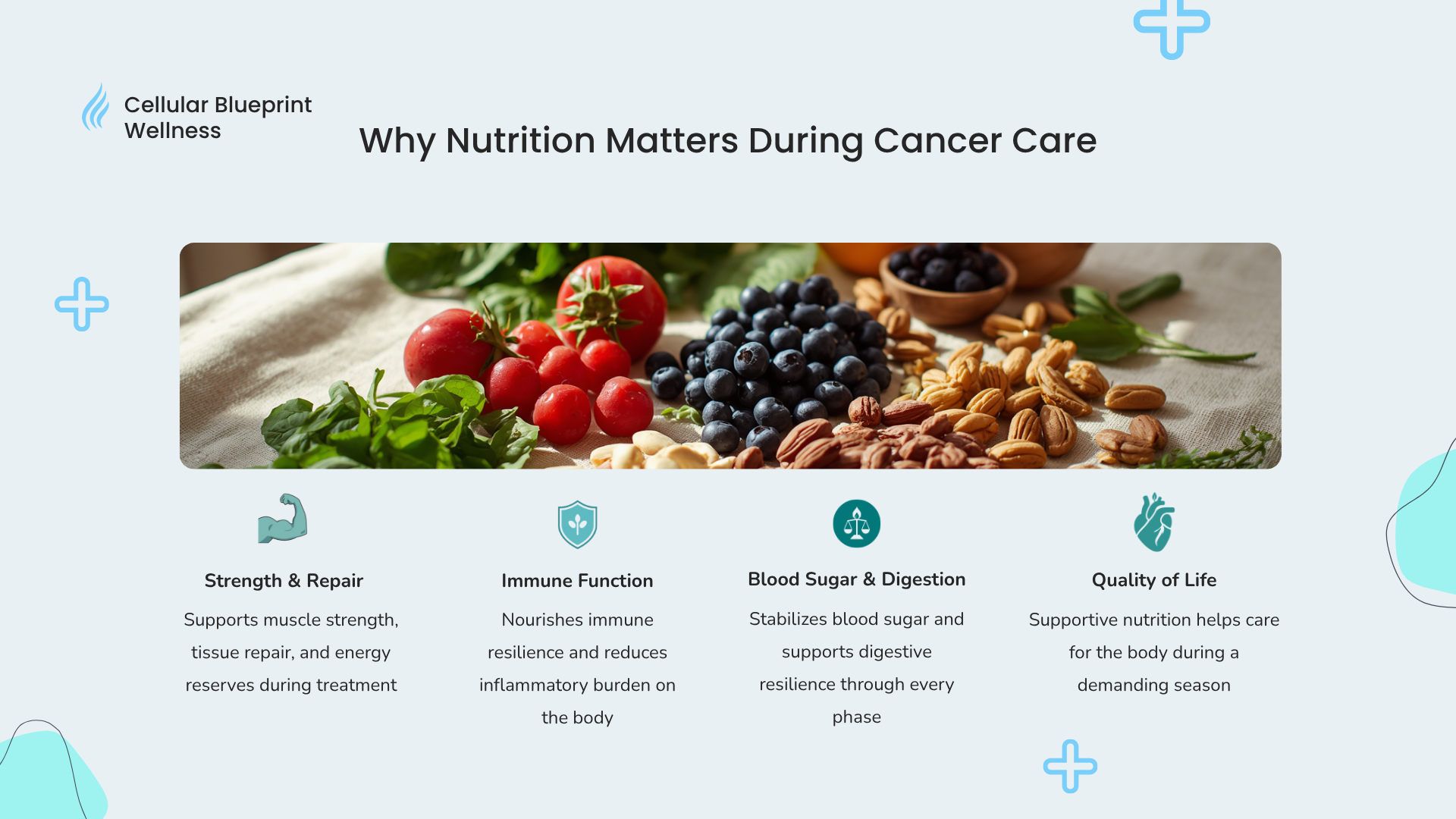
Cancer care can be demanding on the body.
Surgery requires repair. Chemotherapy and radiation may affect appetite, taste, digestion, the mouth, the gut lining, immune function, and energy. Immunotherapy and targeted therapies may come with their own set of nutritional and inflammatory considerations.
Nutrition matters because the body needs raw materials to function.
Protein is needed for tissue repair, immune cells, enzymes, detoxification, and muscle preservation. Healthy fats support cell membranes, hormones, nerve function, and inflammatory balance. Minerals and vitamins help thousands of biochemical reactions take place every day. Fiber feeds beneficial gut bacteria and supports bowel function. Hydration supports circulation, detoxification, kidney function, and energy.
When the body is under stress, nutrition becomes even more important.
This does not mean every patient needs the same diet. In fact, one of the most important truths in nutritional oncology is that the "right" nutrition plan depends on the person.
A patient losing weight during chemotherapy may need a very different plan than a patient gaining weight on hormone therapy. A patient with diarrhea needs a different strategy than someone with constipation. A patient with blood sugar instability needs a different approach than someone struggling to get enough calories. A patient with kidney compromise, liver stress, mouth sores, neuropathy, or poor appetite needs a plan that respects those realities.
The goal is not perfection. The goal is support.
Functional Medicine Looks at the Terrain
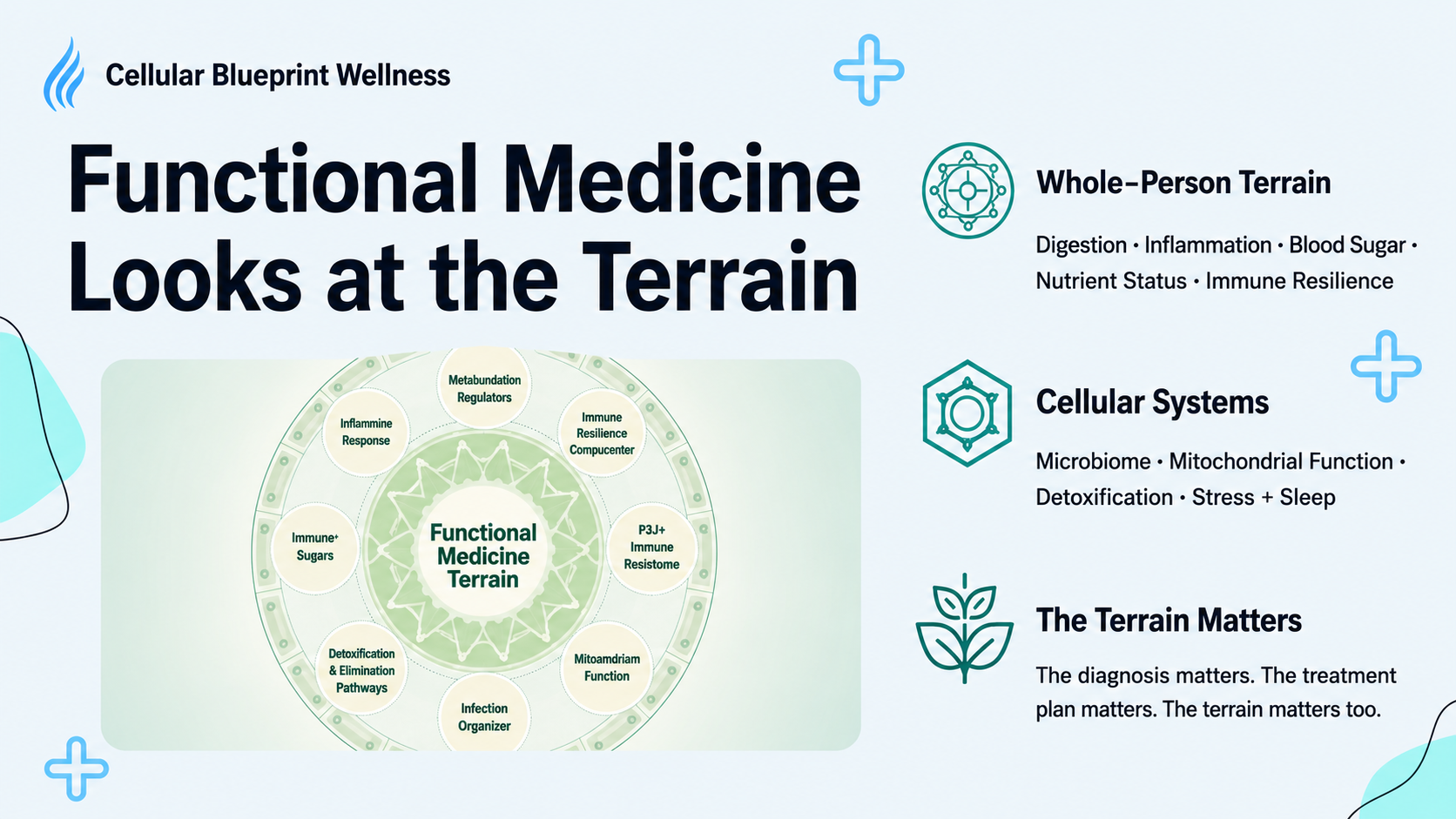
In functional medicine, we often use the word "terrain."
Terrain refers to the internal environment of the body. It includes inflammation, blood sugar, hormones, detoxification capacity, digestion, microbiome balance, nutrient status, mitochondrial function, oxidative stress, immune resilience, stress chemistry, and sleep quality.
The diagnosis matters deeply. The oncology treatment plan matters deeply. But the terrain also matters.
Two people can have the same type of cancer and respond very differently to stress, treatment, nutrition, and recovery. One may have strong digestion and stable weight. Another may have long-standing gut issues, low protein intake, poor sleep, high inflammation, blood sugar swings, and major nutrient depletion.
A functional medicine approach does not ignore the cancer. It simply refuses to ignore the person.
The terrain is not about blame. Patients should never be made to feel that they caused their disease or that they must fix everything on their own. Cancer is complex. Biology is complex. Life is complex.
The terrain is about support. It gives us places where we may be able to help the body function better while the oncology team addresses the cancer directly.
Personalized Nutrition Instead of One-Size-Fits-All Advice
General cancer nutrition advice can be helpful. Most patients benefit from eating more whole foods, reducing highly processed foods, staying hydrated, and getting enough protein. Many benefit from a colorful plant-forward diet that includes vegetables, berries, herbs, fiber, and healthy fats.
But general advice has limits.
A person with severe nausea may not be able to eat a large salad. A person with mouth sores may not tolerate acidic foods. A person with pancreatic insufficiency may struggle to digest fats. A person with low stomach acid may not break down protein well. A person with gut inflammation may react to foods that are normally considered healthy. A person losing weight may need more calorie density, not more restriction.
This is why functional medicine asks, "What does this person need right now?"
Personalized nutritional support looks at the patient's symptoms, treatment phase, labs, digestion, food tolerance, weight changes, muscle mass, stress level, sleep, medications, supplement use, and goals.
Supportive care must also be realistic.
If a patient is exhausted, overwhelmed, and nauseated, the plan should not make them feel like they are failing. A good plan should bring clarity, reduce fear, and give the patient and caregiver simple next steps.
The Key Areas We Want to Support
A functional medicine approach to nutritional oncology often looks at several important areas.
We look at digestion because a person can eat well and still be undernourished if they cannot digest and absorb properly.
We look at inflammation because unresolved inflammation can drain energy, affect appetite, contribute to muscle loss, and increase stress on the body.
We look at blood sugar because glucose regulation affects energy, inflammation, hormones, immune function, and healing capacity.
We look at protein and muscle preservation because muscle supports mobility, blood sugar balance, immune function, treatment tolerance, independence, and recovery.
We look at the microbiome because gut health influences digestion, immune signaling, inflammation, and resilience.
We look at mitochondrial function because many patients experience deep fatigue and need support for cellular energy.
We look at detoxification pathways carefully because the body needs healthy elimination, but aggressive detoxification may not be appropriate during active treatment.
And we look at the whole person because cancer care does not happen in a vacuum. Stress, sleep, fear, family support, faith, and emotional resilience all matter.
Advanced Testing and RGCC Blood Testing
Testing does not replace listening to the patient. But good testing can help us stop guessing.
In functional medicine supportive care, testing may help identify areas of need, such as nutrient insufficiency, inflammation, blood sugar instability, liver stress, kidney function concerns, anemia patterns, thyroid changes, hormone shifts, oxidative stress, gut dysfunction, immune stress, and other terrain factors.
RGCC blood testing is one form of specialty testing used by some trained practitioners in integrative and functional oncology settings. RGCC describes its testing as liquid biopsy testing that evaluates circulating tumor cells, also called CTCs, and other cancer-related markers in the blood.
This kind of information may be of interest to practitioners who are trying to better understand the individual terrain and develop a more personalized supportive care plan.
However, it is important to be clear.
RGCC testing is not presented here as a replacement for biopsy, pathology, imaging, oncology staging, or the treatment plan recommended by a medical oncologist. It should not be used to encourage a patient to avoid standard oncology care. It should be interpreted by trained practitioners, and treatment-related decisions should remain coordinated with the oncology team.
Where RGCC may fit best from a Cellular Blueprint Wellness perspective is as part of a broader conversation about personalization. It may offer additional insight into circulating tumor cell information and cellular patterns. It may help guide supportive nutrition and supplement discussions. It may help the practitioner ask more specific questions about inflammation, oxidative stress, immune considerations, and areas of vulnerability.
But the test is only one piece of the picture.
The patient's symptoms, labs, diagnosis, treatment plan, medication list, nutritional intake, digestion, sleep, emotional state, faith, family support, and goals all matter. No test should cause us to stop seeing the person.
Working Alongside Medical Oncology
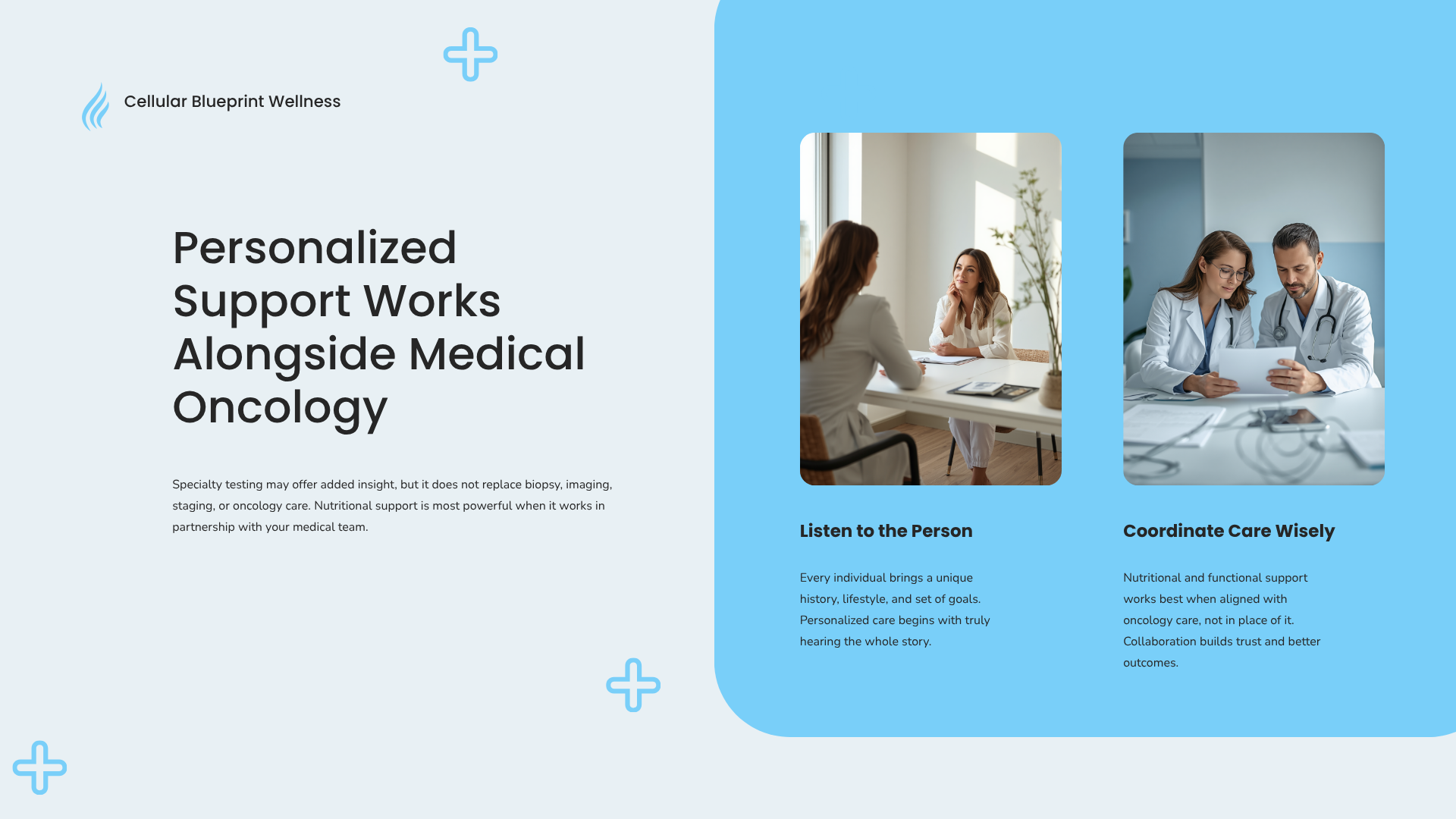
A healthy, supportive oncology plan works alongside the oncology team, not against it.
Medical oncology plays a central role in diagnosis, staging, surgery, chemotherapy, radiation, immunotherapy, targeted therapy, monitoring, and emergency care. Nutritional oncology should respect that role.
The best supportive care happens when the patient is not forced to choose between conventional oncology and whole-person support. Many patients want both. They want excellent medical care, and they also want to know how to strengthen their body, improve nutrition, support quality of life, and make wise choices at home.
That is a reasonable desire.
A trained nutritional oncology practitioner should ask about the oncology treatment plan, medication list, lab trends, side effects, and restrictions. Supplements should be reviewed for interactions. Extreme diets should be avoided unless medically appropriate and carefully supervised. Communication should be encouraged.
The goal is not conflict. The goal is coordinated care.
Food as Support, Not Fear
Many cancer patients become afraid of food.
They are told sugar feeds cancer, meat is bad, soy is bad, dairy is bad, fruit has too much sugar, fasting is required, supplements are dangerous, supplements are necessary, raw food is best, raw food is unsafe, keto is the answer, plants are the answer, and everything in between.
This kind of confusion can leave patients anxious and undernourished.
At Cellular Blueprint Wellness, we want to lower the fear and increase clarity.
Food should not become another source of shame. Nutrition should support the body and the person. Yes, food choices matter. Yes, blood sugar matters. Yes, inflammation matters. Yes, quality matters. But fear is not a healing strategy.
A supportive plan may include simple steps such as adding protein at breakfast, using soups or smoothies when chewing is hard, choosing cooked vegetables when raw foods are not tolerated, improving hydration, reviewing supplements for safety, or creating a meal plan the caregiver can actually follow.
Small steps can make a meaningful difference.
A Gentle Next Step
Nutritional oncology is not a magic answer. It is not an alternative to medical oncology. It is not a promise of a cure.
It is a supportive, personalized way to care for the body during one of the most demanding seasons a person may ever face.
At Cellular Blueprint Wellness, our heart is to help patients and families stop guessing and begin building a clearer, more personalized plan. We work from a place of respect for medical oncology, deep care for the whole person, and a belief that the body deserves support at every stage of the journey.
If you or someone you love is walking through cancer care and wondering how nutrition, functional medicine, and personalized testing may fit into the bigger picture, Cellular Blueprint Wellness is here to help you take the next step with clarity and compassion.
We do not replace your oncology team. We work to support the person behind the diagnosis.
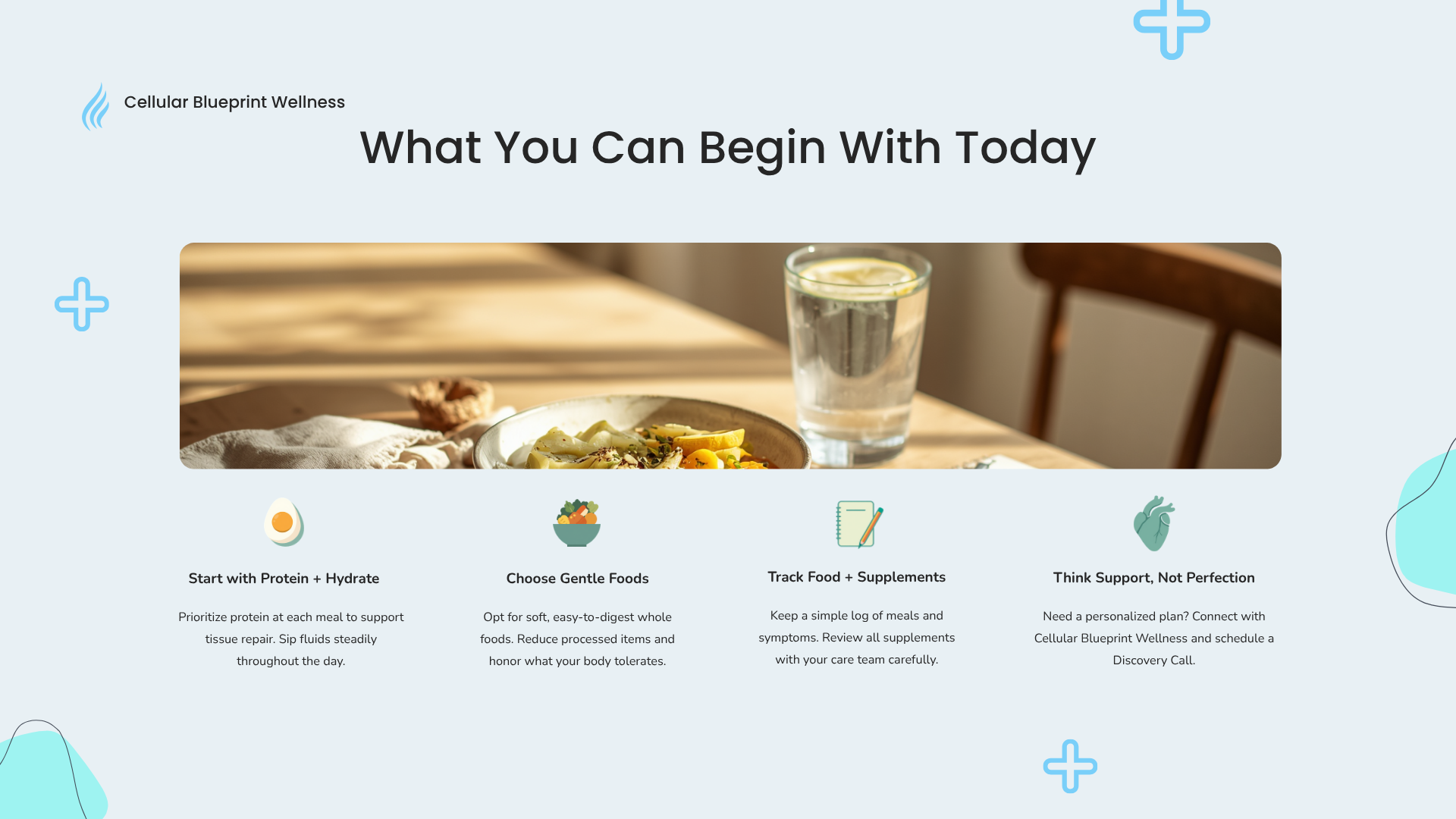
What You Can Begin With Today
When someone is walking through cancer care, the plan does not need to be perfect to be helpful. Sometimes the most meaningful support begins with small, steady steps that help the body feel a little more nourished, a little more stable, and a little less overwhelmed.
Here are a few gentle places to begin.
Start with protein.
If your appetite allows, try adding protein to your first meal of the day. This may be eggs, Greek yogurt, a protein smoothie, chicken soup, fish, turkey, beans, or another protein you tolerate well. Protein helps support muscle, tissue repair, immune function, blood sugar balance, and strength.
Hydrate steadily through the day.
Many patients do better with small, frequent sips instead of trying to drink large amounts at once. Hydration supports energy, bowel function, circulation, kidney function, and healthy elimination.
Choose foods your body can actually tolerate.
During treatment, the "healthiest" food on paper may not be the best food for your body that day. If raw salads are hard to digest, cooked vegetables may be better. If chewing is difficult, soups, smoothies, soft proteins, broths, or blended meals may be easier. Supportive nutrition should meet you where you are.
Keep a simple food and symptom journal.
You do not need anything complicated. Just write down what you ate, how your digestion felt, your energy level, sleep, bowel changes, nausea, appetite, pain, blood sugar swings, or foods that seem to help or hurt. These patterns can be very helpful when building a more personalized plan.
Be careful with supplements.
Supplements can be powerful, and during cancer care they should be reviewed carefully. Chemotherapy, radiation, immunotherapy, surgery, blood thinners, kidney function, liver function, and medications can all change what is appropriate. Do not assume that natural always means safe for your situation.
Think support, not perfection.
One nourishing meal matters. One glass of water matters. One short walk matters. One better night of sleep matters. One less fear-driven decision matters. Small steps, repeated over time, can help restore a sense of direction.
Ask for help before you feel lost.
If you are unsure what to eat, what to avoid, what supplements are safe, or how to support your strength during treatment, you do not have to guess your way through it.
At Cellular Blueprint Wellness, we help patients and families look at the whole picture: symptoms, labs, digestion, nutrition, treatment phase, medications, supplement safety, stress, sleep, and cellular health. Our goal is not to replace your oncology team. Our goal is to help support the person walking through the diagnosis with a plan that is thoughtful, grounded, and personal.
If you or someone you love is navigating cancer care and wants a clearer next step, we invite you to connect with Cellular Blueprint Wellness and schedule a discovery call. Together, we can begin looking at what your body needs now and how to support your strength, resilience, and quality of life with clarity and compassion.
There is no pressure, just a thoughtful conversation designed to bring more clarity, direction, and peace of mind.
Schedule a Free Discovery CallMedical Disclaimer
This article is provided for educational purposes only and is not intended to diagnose, treat, cure, or prevent any disease. It is not medical advice and should not replace care from your physician or qualified healthcare provider. Always speak with your healthcare professional before starting any supplement, making significant lifestyle changes. Each person's history, needs, and response to care are unique.
Supplement Notice
Statements about dietary supplements and wellness products have not been evaluated by the Food and Drug Administration. These products are not intended to diagnose, treat, cure, or prevent any disease.
Leave a Reply
Your email address will not be published. Required fields are marked *